
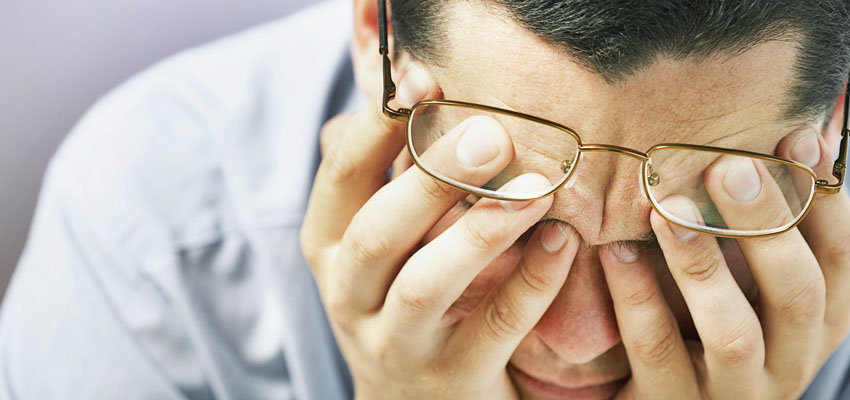
What? Men don’t get depressed? Of course we do, but we tend to hide it well.1
Men tend to deal with depression differently than women and may show different signs that they are depressed. Depression is often a hidden problem with men, since many men tend to suffer in silence, rather than talking about their feelings.
And that has the potential to relationship problems.
Historically, depression has been thought of as mostly a problem for women, but now we know that depression is a problem for men, too. Depression in men may go undetected. In fact, men may not realize they are depressed, although they may recognize they are feeling stressed. And their health care providers often miss the telltale signs.2
Depression is a normal part of life. Yet, if it goes unresolved, it can have a disastrous effect on personal functioning, relationships and careers. It can result in temporary personality changes, uncharacteristic bouts of anger and moodiness, create communication problems, spur conflict, and lead to relationship problems or marital distress. Thus, depression is a condition that must be recognized and treated for men to function on their highest level.3
What Are “Male” Signs to Look for?
1. Men who are depressed may suddenly become irritable and quick to anger. Non-aggressive men may become more aggressive and hostile.4
2. Some may abuse alcohol or drugs, or turn to food for comfort, although some may eat less. It really depends on the person and his circumstances.
3. Some men may over-exercise, while others may stop.
4. One man may throw himself into a favorite hobby whereas a workaholic may become more dependent upon work …while ignoring his relationships.
5. Men may show typical signs of depression, too, such as, feelings of fatigue and burn-out, sleep disturbances and decreased libido. Depressed men may start feeling anxious and worried, and respond poorly to daily problems or stress at work or home, either over-reacting or under-reacting.
Strategies for Helping
First, if you notice that a man you care about is depressed, don’t beat him over the head with your observations; be careful how you approach the subject, or you may make your relationship problems worse. You might try sharing your concern with him, mentioning that you have noticed one or two of his symptoms. Go gently …and see if you can get him to open up about how he’s feeling. Express your concern. Avoid being critical. Don’t blame. Just listen and tell him how concerned you are.5 6
Second, if you know someone the depressed man knows and respects, such as his father, pastor or best friend, suggest that he talk to that person. Or, you may enlist the help of a family member or close friend who has his ear.
Third, try to get him to see his doctor (or yours), and encourage him to talk to his doctor about his depressed feelings (maybe he needs to go for other reasons, too). The physician can make a referral for counseling or prescribe helpful anti-depressant medication, if needed.
Fourth, sometimes we men need a little prodding (and pampering). Be persistent and don’t give up, as long as you proceed in a non-threatening manner. Remember, you want the man to view your efforts to help him as a sign of your deep-felt concern, rather than an attempt to nag or harass him. He won’t end up feeling pressured by you if you always state your concern in non-demanding ways.
The way you say something is as important as what you say. Some sensitive men are hard to approach, but they tend to respond favorably when you talk to them in a direct, caring and gentle manner.
Counseling
Men may not discuss the way they are feeling with anyone, and may not recognize the changes themselves. As a result of societal conditioning, they tend not to talk about their stress with their friends, unlike women, who tend to get support from other women.
If you are in an intimate relationship with a depressed partner, it is often best to seek counseling. It is much easier and more effective to work with a trained relationship professional to discuss your relationship problems. Counseling is one of the best ways to face and deal with depression. It can be just as effective as medication, if not more so. The combination of the two can be even more effective. Sometimes depression can become quite serious and lead to other mental health issues. It is best to take it seriously.
Suggestions
Depressed men may not know they are depressed and may not recognize the signs, and often choose not to talk about the problem. Yet depression can have a negative effect on relationships, careers and all areas of life.
To help a depressed man, look for signs of depression, such as behavioral changes, and talk to the depressed man in a sympathetic way. Give the man in your life, whether it be your husband, father, brother or friend, lots of support and encouragement. Establish communication about your concerns. There is no shame in getting help! Help your spouse or loved one get the help he needs– Don’t allow depression to rob you of joy and happiness. Face it, find solutions and move on!
1 Many parts of this article are heavily adapted from a the following published article: http://EzineArticles.com/862103
2 Eales, M. (1988) Depression and anxiety in unemployed men. Psychological Medicine, 18, 935-945
3 Ibid
4 Addis, M. (2008) Gender and Depression in Men. Clinical Psychology: Science and Practice, 15(3), 153–168.
5 Fischer, A; Good, G. (1997). Men and psychotherapy: An investigation of alexithymia, intimacy, and masculine gender roles. Psychotherapy: Theory, Research, Practice, Training, 34(2), 160-170.
6 Sharpe, M.; Heppner, P. (1991) Gender role, gender-role conflict, and psychological well-being in men. Journal of Counseling Psychology, 38(3), 323-330.